

Nathan Cofnas, the “race realist” researcher behind plagiarism allegations against late University of Cambridge professor Jason Arday, has been suspended from his position at Ghent University as the Belgian institution examines his conduct.

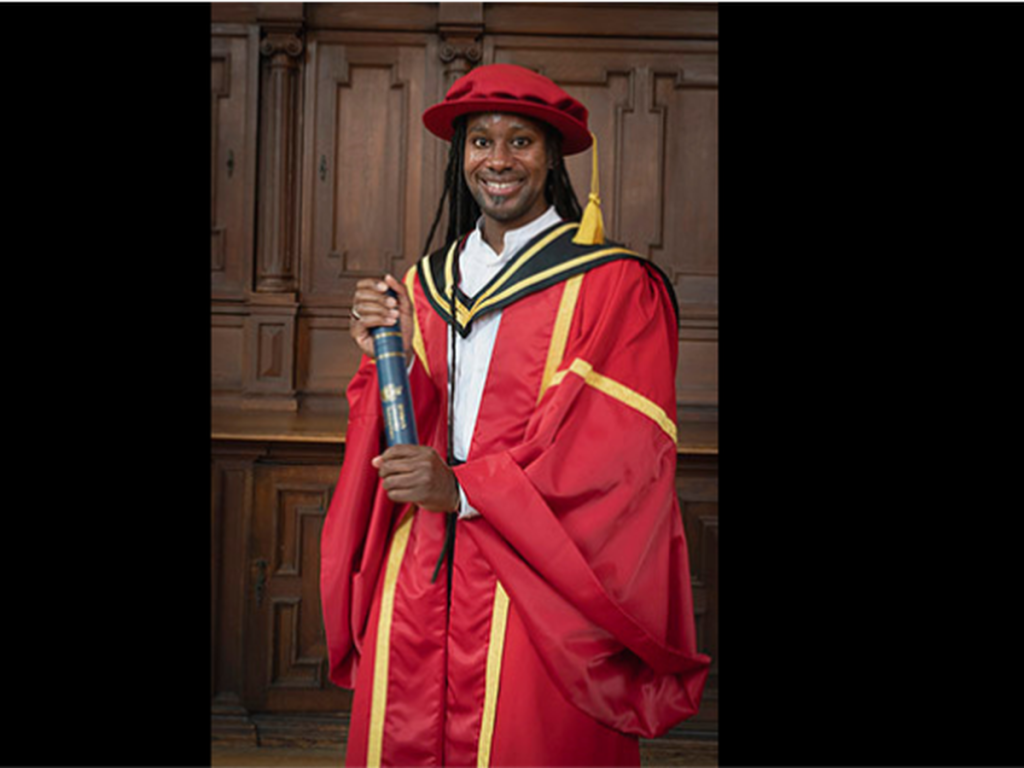
The suspension is a new development in the controversy that surrounded Arday before his death. As previously reported, Arday, 41, resigned from Cambridge earlier this month after Cofnas publicly accused him of plagiarism, allegations The Guardian reported were never proven through a formal investigation. Arday was found dead with no foul play suspected on August 14.
Ghent University is investigating whether Cofnas discriminated against Arday, and he expects the university to ultimately terminate his employment.
Cofnas Says Ghent University Is Investigating Him
Cofnas, a postdoctoral researcher at Ghent University, disclosed his suspension Thursday through posts on X.
“I am under investigation by my university for discriminating against Arday,” Cofnas said.
Cofnas announced the suspension separately, writing,
“I was just suspended by Ghent University. They will almost certainly fire me.”
TMZ reports that Ghent University confirmed the suspension of a staff member while officials consider whether the matter should advance through the university’s disciplinary process.
“The university is assessing whether there are sufficient grounds to refer the case to the competent disciplinary body for further consideration,” Ghent University said.
The university also addressed the circumstances surrounding the controversy after Arday’s death.
“The death of Professor Arday should prompt reflection,” the university said.
Ghent University says it hopes lessons would emerge concerning how people are treated “both within and outside the academic world.”
As previously reported, Cofnas’ accusations originated in a Substack article titled “DEI fraud and cover-up at Cambridge.” In the article, Cofnas alleged that Arday copied from a 2009 thesis written by Paula Zwozdiak-Myers, who studied at Brunel University.
In the article, Cofnas says he ran Arday’s thesis through Copyleaks, a plagiarism-detection tool, and claimed it identified similarities involving more than 100 passages from Zwozdiak-Myers’ work.
Cofnas questioned the circumstances surrounding Arday’s appointment at Cambridge, claiming the university hired him “to advance the cause of racial diversity.”
Following the publication, Arday resigned from Cambridge and was later found dead at a residence in South London. His cause of death has not been released at this time.
Plagiarism Claims Were Not Proven In A Formal Investigation
Although Cofnas’ allegations prompted questions about Arday’s academic achievements, the plagiarism accusations were not established through a formal investigation.
The Guardian reports that criticism has been directed at Cambridge’s response to the controversy as well as some of the media coverage surrounding Arday.
Cambridge Chancellor Chris Smith described what unfolded as a “racist feeding frenzy.”
Ghent University says it was “shocked” by Arday’s death and emphasized that the institution “opposes discrimination, hatred and racism.”
Ghent University Rector Petra De Sutter and Vice-Rector Herwig Reynaert also addressed the balance between academic debate and responsibility in a joint statement cited by The Guardian:
“We attach great importance to academic freedom and to open academic debate, even when views are controversial. However, that freedom is not unlimited. It goes hand in hand with responsibility and may be restricted in order to protect the rights of others.”
The Guardian reports that Ghent University has formally opened a preliminary disciplinary investigation involving Cofnas. His suspension is a “precautionary measure” while officials determine whether the case warrants referral to a disciplinary body.
Cofnas’ allegedly has a history of controversial public statements, adding context to the discrimination investigation now surrounding him.
According to the Guardian, Cofnas lost his role at Emmanuel College, Cambridge, in 2024. He had previously written that in a meritocracy, “Blacks would disappear from almost all high-profile positions outside of sports and entertainment.”
The Guardian also cites a January piece by Cofnas titled “Don’t Scapegoat Women,” in which he claimed, “women but not men can get people fired by pointing and crying.”
Cofnas further argued that employers pursuing what he described as “de facto quotas” had selected less-qualified female candidates and criticized affirmative action hires.
As Ghent University considers whether its preliminary investigation should result in additional disciplinary proceedings, public attention has also remained on Arday.
The Guardian reports that organizers say more than 30,000 people gathered at a vigil for Arday in London’s Trafalgar Square earlier this week. An outpouring of support comes as questions continue over how the Cambridge professor was treated during the public controversy preceding his death.